Showing posts with label ख्याल. Show all posts

Saturday, August 15, 2020

Classicalness to Massicalness - The Hindustani Classical Music


 This blog post is a continuation of the thought process that was initiated in Dec 2018 through the blog : Classicalness Vs Massicalness - A story of Hindustani Classical Music 


The Hindustani classical music is like a flowing river, constantly changing its form from the Dhrupad ,to Khayal of Amir Khusroo to Modern day Khayal of Gharanas to Current mix of Khayal and light classical blend. This transformation is ongoing for ages and the audience is the determining factor that decides the further growth and transformation !
We all connoisseurs are just spectators and unbiased witness to this change and transformation ! 

The transformation of classicalness to massicalness was a forced transformation necessitated by the loss patronage by princely states of India, due to their fall after Indian Independence. In order to popularize music among larger population and gain patronage, festivals like Sawai Gandharva Mahotsav in 1950s , musicians  initiated  "marketing" tricks to attract more audience and patrons for the Hindustani Classical Music ! Most of these Classical Music festivals in India were started by musicians themselves to make Classical Music more "accessible" and "popular" among general masses. This was the first step in diluting or transforming the Classical form to a form that would be more appealing to mass audience. My earlier post on Classicalness to Massicalness in this regard is here.

The real problem is that .. classical music is not for masses , it is for chosen few. One cannot make it "popular" .. people (audience) have to get mature , learned , patient and experience life as such (hence even get older) to appreciate the "Bhaav" or "Ras" aspect of it. The technicalities are taught in schools and gurukuls by teachers and gurus simply to make the student / disciple , attain the ability to learn classical music in his/her own way. It will and has never made a true performer. A classical music performer truly starts "performing" at age of around 35-40 if he has had good training for previous 10-20 years !

The patronage to true Classical music is by a select class ; mature and rich enough to appreciate the depth, dedication, nuance and philosophy of the performing artist. The "Classical Music Festival" music is one where a performer tries to gain popularity among "masses" , many a times by diluting the classicalness with light music , bhajans , songs etc .. This marketing has definitely helped in gaining popularity ,patronage and  acceptance of the "classical" music among masses. In due course of time , this "popularization" might help in making certain percentage of these masses being attracted to the true classical form of music. 

The true classical music form is now performed more in the  "Chamber music" or "Chote-khani mahfils", where a classical performer presents more of the classical side than the massical side of his / her talim. I compare this to the two forms of cricket "Test Match Cricket" and the 20-20 version of the game. Both with their own forms and even complementing to the game as a whole. The "Classical Music Festival" type music could be compared to the ODI form of cricket ! A compromise between the two extremes ! 

Classical music is like a river that transforms every decade and generation over years. We are in a delicate phase of time where we are fortunate to enjoy the true maestros, the budding new talent, rebels as well as true traditionalists.


Monday, April 20, 2020

Vibhaas : The enlightenment, an appeal to Mind and Soul !


                   Sunrise Vietnam Sea - Free photo on Pixabay

तारवा गिनत- गिनत मै को रैन गवाई
ऐसी प्रीत तुम कब हूँ  ना किन्ही
सुरजनवा बलमा प्यारे ...
सदारंग कल ना परत मोहे तोरे बिना
भई हूँ मैं दीवानी

Vid Ashwini Bhide-Deshpande sings extended , but crisp vilambit "hey narhar narayan" followed by "Taarvaa ginat-ginat mai ko raien gavaai".

My morning starts frequently with this "नरहर नारायण" and "तारवा गिनत-गिनत" Vibhaas of Bhairav thaat by Vid Ashwini Bhide-Deshpande and then by Pt Madhup Mudgal , especially during these lock-downs due to Corona virus pandemic. Many a times these days, when the situation of "kal naa parat" is readily experienced,  the drut bandish lingers in mind all day long !
Vibhaas of Bhairav thaat has been the "Raag of Lockdown" for me ... It has that mix of solitude, one-ness, depth, sorrow, longing and hope that characterizes my experience during these challenging times.

अरुपास पाहे रूपी
तोच भाग्यवंत
निसर्गात भरून राहे
अनादी अनंत

To me , Raag Vibhaas has always appealed as a deep morning thought , an enlightenment that makes one explore and persist in spite of all the tribulations.. it has that perfect blend of grandiose, poise and thoughtfulness of primordial Bhairav along with the pensive touch of Marwa. The Yang and Yin of life !
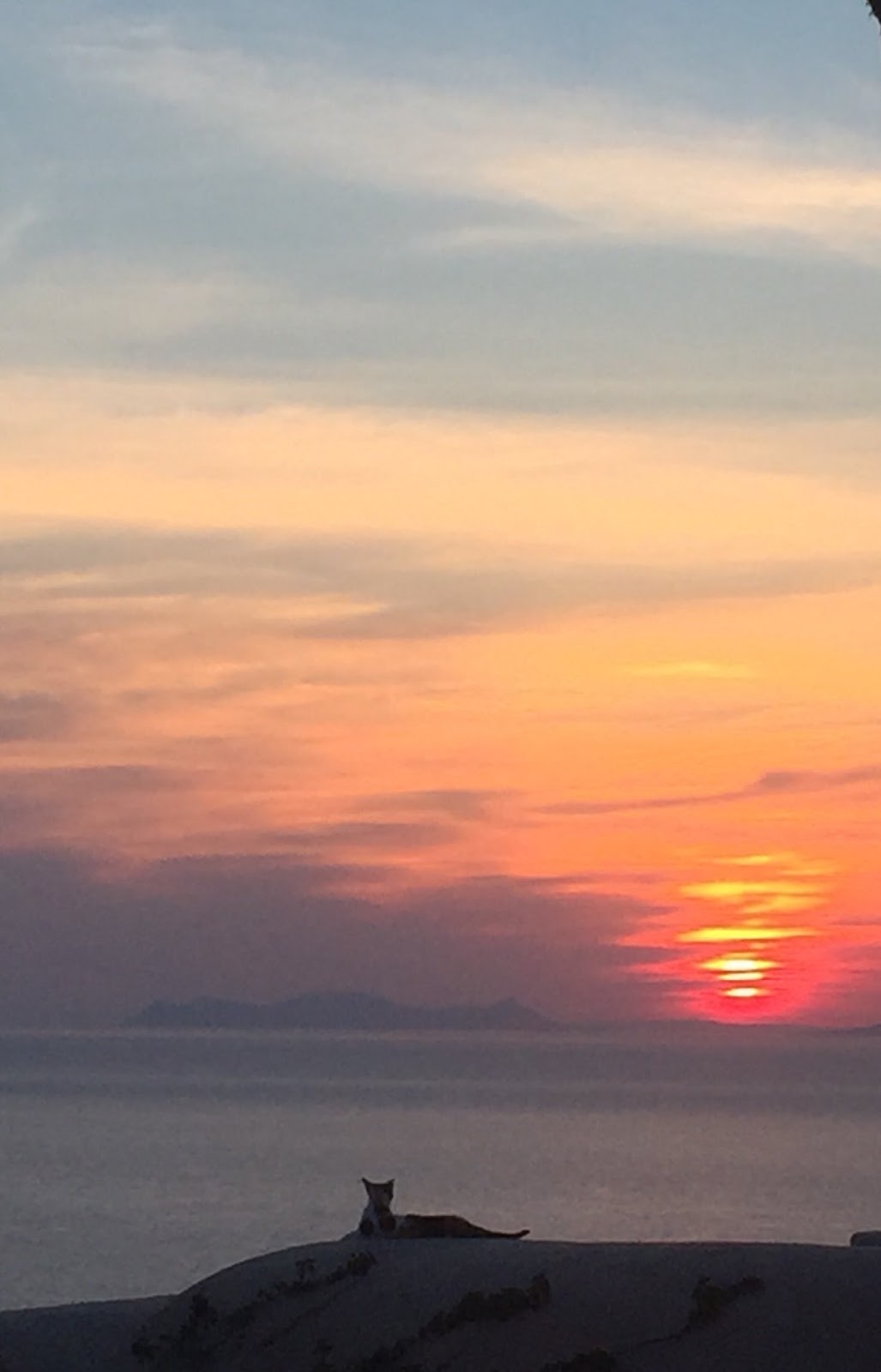
The picture that comes to mind while listening  to Raag Vibhaas (Bhairav thaat) is that of the horizon on a seashore just before the sunrise..early morning golden hour just before the dawn !


This post could be labeled as continuation of the post from May 2018, Vibhaas .. a melody signifying pervasiveness of the Almighty Creator  


I like to listen to Bhairav thaat Vibhaas early in the morning, around 4am and sometimes the Marwa Thaat Vibhaas very late at night in solitude
( Pt Madhup Moudgal - Bhairav Thaat Vibhaas : Taarwa Ginat Ginat mai to raein  )

 ( Kishori Amonkar - Marwa Thaat Vibhaas : Hey Narahari Narayan and Meet Piharava Mora re )


Here is my complete playlist of Raag Vibhaas ( with both Marwa and Bhairav thaat ) 
Vibhaas Playlist 


In my musings on music, I realize that the haunting melodies of Vibhaas are the worldly equivalent of the "Universal Bhairav".. appeals emotionally to human mind and soul more than the Brain !

Vibhaas : Here again is the link to my previous blogpost on Vibhaas with some fine songs with haunting melodies.

Thursday, April 16, 2020

Raag Jog : Hindustani Classical Music in a nut shell !


This blog post is an extension of the post that I started in July 2018 , titled  Raag Jog - the crux of Khayaal 

 Jog and Multani are two of my favorites of Raags of Hindustani Classical Music / Indian Classical Music. I have a special predilection to Raag Jog. To me , raag Jog represents perfectly, what a Khayal is supposed to be ... Raag Jog is a perfect blend of raags ( Khamaj and Kafi ) that creates a "bhaav and ras" conducive to meditative , soulful and entertaining tunes ... it fits well to the definition of a raag as described in scriptures and literature .. रञ्जयति इति रागः .. an entertainment to mind and soul !
Raag Jog , may have initially meant Yog or union , when it was created and envisioned. The one reasoning to it could be that it is a classic mix of Khamaj and Kafi. A pentatonic tune attributed to Kafi thaat in Bhatkande's classification.
The credit for Raag Jog is attributed to Haji Sujan Khan ( Sujan Singh of Akbar Darbar ). This raag is a specialty of Agra Gharana but is in vogue and popularity with almost all gharanas including the Dhrupadiyas, vocalists and instrumentalists alike.
It provides a perfect "union" of entertainment and philosophy , a union of two raags (khamaj and kafi) , that are supposed to be part of semi-classical or light classical music, to produce a brilliant pentatonic serious but pleasant , soulful and meditative melody of Jog.
Here , Pt Jasraj takes us through the journey of Raag Jog .. from Dhrupad Style rendition to Khayaal with "murchanaa" giving a feel of Raag Vrindavani Sarang , Kedar and Gujari Todi ! This shows the versatility of the pentatonic raag Jog that brings into it all eight "Prahars" encapsulating raags associated with morning to midnight !
Here is my playlist of Raag Jog on Youtube that has most of my favorites 

Pt Ajay Chakravarti's Jog is one of the soulful Jog renditions that I like to listen :
The bandish goes as :
 धन जोबन नहीं नाम संजोग,
 कहत मुनि ज्ञानी करत सब
अपनी - अपनी करनी का भोग
आये हसे सब जाये तो रोये
यूँ ही भुगत सब लोग .. धन जोबन नहीं नाम संजोग  

Pt Madhup Moudgal's short rendition of Raag Jog too is my favorite : the bandish goes as
बनरा बनी आयो , ब्याह बनरी को
शुभ घडी ,शुभ दिन , शुभ महूरत मनाओ


I am guessing that this old bandish might have given inspiration to Ut Fayyaj Hussain Khan (प्रेम पिया ) to compose an impromptu bandish in Raag Jog, on occasion of his daughter's marriage ( or it may be even other way around, but both bandishes have than common theme of marriage, union , yog/jog and of happiness of it ) ... now kind of a signature of Raag Jog :  "Saajan more ghar aaye "
साजन मोरे घर आये
मन अतिसुख पावे
मंगल गावो शौक पुरावो
प्रेम पिया हम पाए

Raag Jog is my favorite and the joy it gives my soul is immense. The bandishes mentioned above are some of my favorites. I would say that I fell in love with Hindustani Classical Music after listening to Raag Purvi ( Thaat Purvi) and gradually moved from Multani to Bhairav to other raags eventually reaching Raag Jog..
Raag Jog has given me that "ठेहराव"  "Theharaav" (pause) .. It has everything that pleases my soul and my mind through music.

Here is a recent addition to my favorite playlist .. a poignant rendition of  raag Jog by the Ustad-Shagird duo from Lahore (Pakistan) .. through two beautiful bandishes !

ओ बलमा ..  कब घर आओगे , मध जोबत मोरा बीता जाए .. बेगर दरस दिखा जा 
साजन कासे कहूँ ..  अपने मन के बतियाँ ..  बिन तुम्हरे जागी मैं  !
- राग जोग 


Here again is link to my playlist on youtube for Raag Jog.

Sunday, December 15, 2019

From Classicalness to Massicalness : Productization of Indian Classical Music


Change is a constant phenomenon and Hindustani Classical Music is a living example of how the "classicalness" of music has changed over centuries .. initially from Dhrupad to Khayal , imbibing the folk tunes into the classicalness, new rhythms and thekas , newer forms of "light classical music" in the form of thumris , tappas , gazals and bhajans into the concerts of Indian ( Hindustani ) Classical Music.
As a "Punekar" , every December, over last 20 plus years ,I have witnessed this changing form and face in Pune's very own , the world famous festival of classical music , popularly known as "Sawai". The change is pronounced in last 4-5 years. With the advent of social media , penetration of mobile internet to every nook and corner, cheap internet access and more so , WhatsApp which had immense effect on music / music industry and especially Hindustani Classical Music

This blog post is a continuation of the thought process that was initiated in Dec 2018 through the blog : Classicalness Vs Massicalness - A story of Hindustani Classical Music
  
As I ponder over the basic idea behind starting such festivals like Sawai Gandharva Mahotsav in 1950s , I realize a grim fact that forced musicians to initiate such "marketing" tricks to attract more audience and patrons for the Hindustani Classical Music ! Most of these Classical Music festivals in India were started by musicians themselves to make Classical Music more "accessible" and "popular" among general masses. The gharana gayaki of classical music was limited to "Darbars" and concerts of Princely states until the freedom of India around 1950. Infact , these princely states were instrumental in the growth of gharana gayaki and were the main patrons of all the classical musicians. The rebirth of Jaipur and Kirana gayaki could be attributed to the patronage of princely states of Kolhapur and Mysore respectively.
With the fall of princely states the patronage was lost and these musicians , had to find newer audience to appreciate and pay for their art. Their livelihood was at stake. The emergence of "Natya Sangit" in Maharashtra could be attributed to this initiative to bring classical music near the masses through light classical compositions in dramas ( Natya). The emergence of Gandharva Sangit Mahavidyala to promote classical music was one such step. Active initiatives were taken by various Pandits and Ustads to make classical music appealing to masses , by sometimes diluting it. Pure form of Classical music concerts became rare and each classical music concert was inter-spread with some light classical compositions like thumris , tappas , natya sangit , gazals , qawwalis etc , for commercial reasons.
This lead to disappearance of pure classical genre like the old Jaipur gayaki ( based on three schools of Dhrupad ) and the Dhrupad itself from the concert scene.

The Hindustani classical music is like a flowing river, constantly changing its form from the Dhrupad ,to Khayal of Amir Khusroo to Modern day Khayal of Gharanas to Current mix of Khayal and light classical blend. This transformation is ongoing for ages and the audience is the determining factor that decides the further growth and transformation !
We all connoisseurs are just spectators and unbiased witness to this change and transformation !
 

Saturday, July 14, 2018

Raag Jog .. the crux of Khayal


Raag Jog is a favorite among all performing artists , vocalists and Instrumentalists, across various gharanas including Dhrupadiyas. Connoisseurs of music along with general music lovers seem to like the tunes and melodies composed in raag Jog fairly commonly. Jog , therefore pervades across various genres of music ; classical , light -classical , film music to Dhrupad.

Raag Jog , may have initially meant Yog or union , when it was created and envisioned. The one reasoning to it could be that it is a classic mix of Khamaj and Kafi. A pentatonic tune attributed to Kafi thaat in Bhatkande's classification.
The credit for Raag Jog is attributed to Haji Sujan Khan ( Sujan Singh of Akbar Darbar ). This raag is a speciality of Agra Gharana but is in vogue and popularity with almost all gharanas including the Dhrupadiyas, vocalists and instrumentalists alike.
It provides a perfect "union" of entertainment and philosophy , a union of two raags (khamaj and kafi) , that are supposed to be part of semi-classical or light classical music, to produce a brilliant pentatonic serious but pleasant , soulful and meditative melody of Jog.
I could list many of my favorites in Jog but have limited to few for sake of brevity.


Pandit Jasraj and Pt Hariprasad Chaurasia Jog

The famous and popular bhajan by Pt Jasraj


The classic "Daraspiya" bandish in vilambit "Peeharava ko biramaye"(पिहरवा को बिरमाये ) and the drut jod bandish , a creation by Ut Fayyaj Khan "Sajan More Ghar aye" ( साजन मोरे घर आए ) , that was  created to welcome his son in law on wedding day !

Here is Ut Rashid Khan with the "classic" khayal in Raag Jog.


Kaushiki Chakravarty , raag Jog :


The final instrumental rendition of Jog is the one I like and admire the most. Ut Sultan Khan with his two shagirds ,. in Pune, 2011.


Ustadji explains how Instrumentalists play "Khayal" bandishes in their renditions , just like vocalists. I like this point because  I have been observing that more and more instrumentalists (younger) have been playing much of Jazz like or Fusion type of music on Indian string instruments like Sarod and Sitar. They somehow lack that "Khayal" sense ( may be due to lack of training in traditional khayal bandishes )
An instrumentalist when performing "Khayal" bandishes, somehow touches soul of connoisseur deeper than pure tunes or gats.  Vocal style instrumental performances ( gayaki ang) sound more classical than the fusion type / Jazz type rendering of instrumental music, because these renditions have a "thought" behind them (Khayal), through bandishes rooted in vocal music.
 An instrumentalist performing a bandish is more attractive, sometimes more than the vocalist playing the same bandish ! ( may be due to non-interference of "words" and their pronunciations !!)

To me , raag Jog represents perfectly, what a Khayal is supposed to be ... A perfect blend of raags (Khamaj and Kafi ) that creates a "bhaav and ras" conducive to meditative , soulful and entertaining tunes ... it fits well to the definition of a raag as described in scriptures and literature .. रञ्जयति इति रागः .. an entertainment to mind and soul !


Here are some more posts related to Khyaal / Khayal / Raagdari sangeet

Khyaal - A poetic musical tweet !

Raagdaari -Khyaal and Bandishes : Part 1

Raagdaari - Raag sangit and Khyaal : Part 2 


Wednesday, May 9, 2018

Bageshree encroachment


Raag Bageshree is a very pleasing raag of Kafi thaat, very popular among almost all gharanas and maesteros. This raag , however has extended its limits over period of time , trespassing , encroaching upon the territory of others.  It is a classic example of how the artistic freedom of performing a raag has gone too far, stretching the limits of a raag ... "rules of a raag" are amended over a period of time to accomodate almost everything that is sung in that matrix or around !
So much so that when one starts  looking at raags like Gorakh Kalyan , Narayani, Nayaki Kanada , some versions of Durga and Malgunji , one is struck at the fact that Bageshree has almost overshadowed these distinct raags by including their kernel into itself over a period of time !

Looking at Raag Bageshree, one is amazed at the way "rules" of Raagdaari sangeet are so twisted and turned in order to accomodate everything that maestroes do or simply to include every modification under one popular umbrella !!
Officially and originally , Raag Bageshree was supposed to be Audav-Shadav raag ( 5 notes in ascending and 6 in descending ). However , due to artistic freedom of maesteros, over period of time, it  was upgraded to two more versions
Version 1 ( Standard Original ) : Audav-Shadav - R and P are varjit in ascending, P in descending
Version 2 Audav-Sampoorn: R and P are varjit in ascending
Version 3 Sampoorn-Sampoorn:  All the swaras are present

The problem is clearly noticed when labeling a rendion to Gorakh Kalyan , Bageshree or Narayani. This is especially true when one hears younger singers who are performing one without the knowledge of other two! More so in case of Instrumentalists than the vocalists (where bandishes almost define raag)
I would not be surprised if someone starts calling this matrix as "Bageshree ragaang" or "Bageshree Thaat" in future ! Popularity among connoisseurs and performers could be the reason for this unhindered Bageshree encroachment !

Wednesday, November 8, 2017

November to Remember ..Surashree Kesarbai Kerkar Samaroh 2017


I grabbed an opportunity for a second vacation of the year in Goa with 37th Surashree Kesarbai Kerkar Samaroh, Nov 3-5, 2017. Here are the links to my previous two Goa Vacations : 36th Surashree Kesarbai Kerkar Samaroh 2016 Nov 4-6 and Abhisheki Mahotsav Sept 7-9 , 2017.

Some of the highlights of my current Goa visit :
1) Enjoying some splendid beaches and hamlets of North Goa - Keri , Mandre and Harmal (against South Goa beaches around Marjorda in Sept )
2) Meeting some wonderful cats of North Goa
3) Like every Goa vacation, enjoying the great hospitality, food and drinks
4) Some memorable wonderful concerts , especially the one to remember was of Ut Irshad Khan - Surbahar on Nov 4th evening.

Here is a brief report of 37th Surashree Kesarbai Kerkar Samaroh , Nov 3-5 held at the beautiful campus of Kala Academy , Panjim Goa.
The Curtain raiser event titled "The future of Indian Classical Music" included discussion by Musicologists and performers Dr Chaitanya Kunte , Dr Shashank Maktedar and Dr Arwind Thatte moderated by Mukund Sangoram that went on for over two hours. The key takeaways were :
1) Indian Classical Music is moving from being process oriented Classical performances towards "Productization" due to various reasons from Marketing to Technology to demand of audience
2) Connoisseurs determine the sustainability of performing art ..hence the future audience would determine the type of music that would be called as "classical"
3) There is a trend moving towards smaller baithaks (Chotekhani maifils) or chamber music from big festivals
4) Good techniques of Teaching classical music and use of technology is going to be an essential feature in future training.
5) Due to universal appeal and purity of music , the instrumental music will be more acceptable and popular world wide the the vocal classical music , a trend that is already in vogue.
The festival was inaugurated with a concert by Pt Ulhas Kashalkar who presented raag Hemant and Basanti Kedar. The instrumental jugalbandi of Rakesh Chaurasia - flute and Jayanti Kumaresh- Saraswati veena who presented Madhuvanti and Hansdhwani concluded day 1 of festival.

Day 2 started with the morning concert of Devaki Pandit who presented
Lalat- घट ना लागी रे जागो जी जागो and जा जा रे जा रे बलमवा
Hindol - छनक गुंद भईलवा  and बन उपवन डोले मान ऋतू बसंत
Concluding the concert with Chaiti based on Kirwani - आली पिया बिन मोरा जिया तरपत 
The other notable concert of day 2 was of Pt Ajay Pohankar in the evening who presented Yaman in a very traditional form and was real music to ears.

The most memorable concert of the evening and of the festival was however the Saturday evening concert of Ut Irshad Khan who mesmerized the audience with his Surbahar .. the concert started by 8pm with Darbari Kanada alaap for 45 minutes that brought a pleasurable calmness in the auditorium. The power of three octaves of Surbahar and the dexterity of Ustad bringing out almost all 7 notes in one fret of Instrument was phenomenal ! The power of Dhrupad with Chautaal on Pakhawaj by Pratap Patil took the concert to another level, jod and jhala spreading all three octaves. Second raag chosen was Jhinjhoti that brought out the best of Instrument and Dhrupad style. The Ustad was in great mood and so was the audience who reciprocated with thunderous applause. The conclusion of the concert was with Bhairavi when the Ustad also sang "बाजू बंद खुल खुल जाय" and "सुनी पड़ी है नगरिया हमार , आओ नगरिया हमार"
This was the icing on the cake .. the concert that ended by 10pm ( which is midnight in Panjim's standard where concerts end by 8.30-9 !) , would be a memorable one for the houseful audience who were treated not just with a wonderful dessert but also a nice paan ( as the Ustad himself analogized it ! )
Here is a link to report of his previous performance at Sawai 2016

Day 3 , the final day of the festival began with the morning concert of Raghunandan Panshikar who presented Bahaduri Todi (महादेव) and Sukhiya Bilawal(हे देवी दुर्गे ), a drut bandish in Allaiyya Bilawal  (कवन बतारिया ) and bhajan "बोलावा विट्ठल"
Though he has good voice quality fitting light classical music , he lacks the aura ,temper, thoughtfulness, maturity , commanding voice, thinking and grandiose for expansive classical vocal concert, which was evident in his lack of badhats or expansion of raag. To be honest, he is good enough only for light classical, fails to impress as a classical vocalist now and again ! 

The better concert of the morning was by Ut Shujaat Khan - Sitar accompanied on Tabla by young masters Sapan Adharia and Mayank Bedekar. This was truly a classical concert to be enjoyed for full hour of Allaiyya Bilawal with some excellent fast tempo jugalbandis between Sitar and Tabla. Surprisingly , the Ustad did not sing any bandish and decided to conclude the concert in 1 hour only after one raag !


The other concert that I attended was the finale by Pt Venkatesh Kumar who along with Pt Vishwanath Kanhere on Harmonium enthralled the audience starting with Chaya Nat for around 45 minutes ( एरी गुन्दलावो रे मालनिया , झननन नन नन बाजे पायलिया ) , Kaunsi Kanada ( राजन के सरताज , काहे करत मोसे बरजोरी ) concluding with two bhajans ( नाम जपन क्यों छोड़ दिया , भज रे हनुमंतम )

Like every year , Dr Roopa Chari was exceptionally brilliant as a compere. I wish , other classical musical festivals too have good compere like her ! 
The festival concluded by 9pm on Sunday evening and the audience went home satisfied, full stomach with desserts and paan with a promise to meet next year in November..and that is the most important month for classical music fans of Panjim to remember!


Here is the facebook album link for some more snaps  : November to Remember


Tuesday, October 31, 2017

Raagdaari, Khyaal and Bandishes : Part 1


One of the most glaring misconception about Indian or Hindustani Classical Music stems from its nomenclature. In Indian languages, classical music is referred to as "Shastriya" (शास्त्रिय संगीत) that literally translates to "Scientific" music. There lies the root cause of the misconceptions .. a misnomer as Scientific (shastriya) instead of being called "Abhijaat" (अभिजात) that correctly translates to "Classical" in real sense. This has previously been referred to in my earlier blog post here.
One more issue is that, classical music is not for masses. The music of masses is generally rhythm based, with a catchy melody, called folk , pop or in India the typical "Bollywood" music. These types of light musical compositions may have their  root of tunes and rhythm in the classical music, but they need to be referred to as light music or popular music (pop). This fact has to be understood very clearly before any discussion on Indian or Hindustani classical music.

There is a general trend in India, of mentioning that song "xyz" from film "pqr" is based on some "abc" raag. This kind of over simplification has corrupted the beauty of classical music. A song is NEVER based on a raag. The most one can really say is that a song "xyz" is based on a tune or melody (धून ) that is used in a particular bandish of "abc" raag ... Nothing beyond that !
To further clarify , a raag has many dimensions and hence , many bandishes are composed to various melodies/tunes (धून) and rhythmic patterns (ताल) to elaborate and express that particular raag.

In this era of Whatsapp, one often finds posts of amateur fans of classical music, making lists of songs in particular raag etc... and that is fine for a student of music to recognize common musical patterns in the song and raag. It is a great way of learning music from what is known to the unknown. It does help in consolidating the key phrases of the raag that occur in the popular music and in associating to a particular named raag. 

Coming back to the point of discussion : Raagdaari is a way of elaborating and expressing a raag through Khyaal. Which in turn uses a Bandish, set in a particular tune/melody (धून) and rhythmic pattern (ताल) to express one or more of the multiple facets of a particular raag.
A raag is simply a set of rules for using the set of notes. Expression of raag is called raagdaari. Often an analogy is given for raagdaari sangit to painting on a canvas.
The frame of the canvas is like the set of rules of the particular raag. Set of Colours , brushes and their strokes are tools for elaborating that particular bandish, over the canvas of the raag. This mode of expression is called raagdaari. This live "process of painting" is enjoyed by the painter(s) and the audience.
One important reason for the "classical" ness of the Indian Classical Music is this lively interaction between audience and performers that induces spontaneous improvisations. The other critical part of raagdaari , in Khyaal form, is the poetry of the bandish used in elaborating a raag. These words of poetry set to a specific melody (धून ), rhythmic patterns, tempo and modulations of sound, go beyond the literal meaning of the words of those lyrics of bandish, conveying a philosophy/thought / image ,that makes the listener "think" (ख्याल ) and enjoy the beauty of music, often fantasizing and philosophical pondering of situations in worldly living, opening up the mind for a blissful experience to the connoisseurs. 
Hence Khyaal or Khayal gayaki of raagdaari , is intense , broader and illuminates mind of listeners through a "thought" that leaves for broader imagination and thinking , often philosophical in nature in tune with the subtle "Bhaav" or "Ras" of the raag !

Here is a related post on Khyaal/Khayal .. a poetic tweet.


Tuesday, September 19, 2017

Viva Goa - 2017 !


Abhisheki Mahotsav at Kala Academy of Goa on Sept 9-10th, gave me an opportunity to visit Panjim for my early "Goa vacation". Last year , I had grabbed the occasion of Kesarbai Kerkar Mahotsav to visit my favorite "Kala Academy" of Panjim , Goa.
Here is a brief report of the two day classical music festival:
The festival was a 10am to 10pm, two day event divided in four sessions comprising of around 4 artists per session. For me Day 1 was more than enough to fill in the thirst of classical music performances. Day 2 was mere a nominal attendance of which I attended only 3 of 8 performances.

Session 1
Shilpa Duble : Opened the festival with Gujri Todi vilambit "Sukhar Balri" followed by Vibhas with komal rishabh "E karo mangal sadashiv naam tero" and "Pyari Pyari batiya kar-kar mohan" concluding with a Abhisheki buwa bhajan "sagun sampanna pandharichya rayaa"

Mohan Darekar : a Abhisheki buwa disciple who now trains under Pt Rajan-Sajan Mishra, presented a wonderful Zeelaf todi  ( Abhisheki buwa specialty )  starting with "Tab se Jug samaan" and following up with "Daras bin suno laago Des". He concluded his short but sweet presentation with a Kabir bhajan "Saadho so satguru mohe bhaave"

Sonik Velingkar: a local flautist presented with Raag Parmeshwari alaap , gat in rupak and a gat in teentaal.

Jayashree Patnekar: was the top ticket of the opening session who presented her trademark Bahaduri Todi with bandishes "Mahadev" and "Raaj raho" followed by the Ramrang bandish "Aai mai tihari sharan". She concluded her presentation with a Bhairavi thumri "Kalan mori laagi re kanhyai" and a tarana that concluded the opening session.


Session 2
Dhananjay Hegde : Opened second session of the festival with a Bhimpalas "Ab to badi der" and "ja ja re apne mandirava" concluding with a marathi bhajan "Gurukrupevin naahi aatmadnyan"

Bhuvanesh Komkali: started with Puriya Dhanaashree "Bal gai jyot" and "Ajaraa din dubaa" followed up with a Nand Kedar bandish "aa de biraan" and concluding with a bhajan "Kudarat ki gati nyaari"
 
Ustad Usman Khan - Sitar was one of the top tickets of the evening session who started with an alaap in Janasammohini following up with a gat. He concluded with an alaap and dhun in Mishra Shivaranjani set to Deepchandi taal.


Aarti Ankalikar-Tikekar was the concluding artist for day one  who appropriately started with Miya Malhar as the rains and thunderstorms battered Panjim -  "Ata Ghumad aaye badariya garaj garaj barasan paar"
This was followed by Anand Malhar bandish of Kishori Amonkar "Barasat Ghan aayo" and a Taalmala in Malhar "Naadbramha Parameshwar" . The bhairavi tappa "Dilbahar aa bhi jaa" was icing on the cake and it seemed that she was just getting started when she had to conclude due to constrain of time !

Session 3
Anuja Zokarkar, a young budding singer of Agra Gharana, began the session 3 or the Day 2 of festival with a Bhupal Todi "Maangat Maangat aayo dar tore" and "Bhanak pari kaan aagam balam ki". This was followed by Mishra Kafi Tappa "E miyan janevaale" and "Chaandu Chandu Chalay mori baiyyan" . She aptly concluded with a Abhisheki buwa bhajan "Vishnumay jag"

I missed the rest of the morning session and a part of evening session that included
Sanjay Garud
Farooque Lateef- Sarangi
Raja Kale
Session 4
Vidya Deshpande - Kathak
Abhijeet Pohankar - Keyboard

The only performance of Session 4 that I could attend was that of Manjiri Asanare Kelkar who started with raag Jaitashree "Jab se piyu sapane me aaye" and "Bahut din bite ri aali". The second raag was Megh Malhar with "Badaravaa barasanat barasanko aaye". She concluded her presentation with a abhang of sant Tukaram popularized by Kishori Amonkar "Avagha to shakun , hrudayi devache chitta"

The finale was by Pt Hariprasad Chaurasia- Flute that I missed due to business meeting.

The highlights of my Goa Trip were :
- The Highly humid and uncomfortable heat of Panjim
- Thunderstorms that almost caught everyone by surprise and drenched the unprepared vacationers
- The daily sight of the huge vessle that was stuck on Miramar beach
- Beautiful beaches of South Goa
- Superb hospitality , food and drinks of Goa !

Here is a link to facebook photo-video album 

Viva Goa ! Till next year !

Sunday, June 25, 2017

Sadraa (सदरा) - The link between Dhrupad and Khyaal


My first tête-à-tête with Sadaraa was when I heard Purbayan Chatterjee presenting vocal during his Sitar recital of Raag Kedar .. "जागे कौन महल में  सोया रे" (jaage kaun mahal mein soya re ). Subsequently I realized that I had heard many bandishes in Dhrupad and Khyaal style renditions , that were basically to labelled as "Sadraa". The most popular of such Sadraas is the Bhairavi by Begum Parveen Sultana "Bhavani Dayani" ( भवानी दयानी ).

Sadaraa , Sadara or Sadra (सदरा) is a form of Indian Classical Vocal genre , that connects Dhrupad style to that of Khyaal. The characteristic feature of Sadra is that, it is always composed in a  ten (10) beat cycle taal such as Jhaptaal.
A single line or sentence is repeated (similar to Dhrupad), decorated with meend , gamaks and bolbaat taans. In addition , it has decorative tools of murkis and taankaari that is typically characteristic of Khyaal genre. One important characteristic of Sadraa is that the bols or lyrics have a blend of devotion , spiritualism and deeper philosophy.

Here Pt Ajoy Chakraborty sings the Sadraa in Kedar ( starting 34.10 )
Jage kaun Mahal me soya.

The quintessential Bhavani Dayani by Begum Parveen Sultana 

Bhavani Dayani of Pt Ajoy Chakraborty


Reference
Sadra (music) on wiki

Musings - Pondering and other stuff 

Dhrupad-Khyaal Sanvaad

Khyaal (ख्याल)


Saturday, June 24, 2017

Khyaal ( ख्याल ) : A poetic musical tweet


As a connoisseur of  "Khyaal" gayaki , one realizes how Khyaal represents a composite intervening of various artistic forms of India. It truly expresses in musical form , complex interpretations of poetry, melody , rhythm , philosophy and even science of sound to provide a complete entertainment to mind and soul. 95% of the Indian Classical Music or Hindustani Classical Music is in form of Khyaal , presenting the raagdari through bandishes, sadras, thumris , bhajans and gazals. Khyaal truly represents the culture and philosophy of the Indian Sub-continent and the concept of  "Sangeet" ( music , dance and poetry )

Khyaal (or Khayal, Urdu: خیال, Hindi: ख़्याल, ) is the modern genre of classical singing in North India. Its name comes from an Arabic word meaning “imagination”. It appeared more recently than dhrupad, is a more free and flexible form, and it provides greater scope for improvisation. Like all Indian classical music, khyal is modal, with a single melodic line and no harmonic parts. The modes are called raga, and each raga is a complicated framework of melodic rules.

Khyaal is a Contemplation , Musing, Imagination , a poetic expression of emotions (bhaav - ras ) through musical notes.
Dhrupad , the art (and science) of expressing through sound .. is regarded as the language of sound. It is essentially the primary basis of the classical music of India as we know it today. The development of Khyaal , the use of poetry to express in musical form , gives it a more practical and grounding characteristic. The combination of poetry with the classical basis of raag system ( as envisioned in Dhrupad) has become popular means for musical expression in Hindustani Classical Music.
A Khyaal has a thought ,a story , an intense feeling and more worldly situation to express emotions. ( bhaav / ras  as we know it in classical music ) One is stimulated to think, imagine, fantasize and experience the immense possibilities of situations and blissful experiences encompassed or described in a single sentence. The interpretations of the situation described in a khyaal is the crux, expanded and explored through musical expressions, creating a milieu that often is the "Bhaav" and "Ras" of a bandish.
I am often tempted towards comparing "Khyaal" to a modern day "Twitter" where a precise thought is expressed in 140 characters ! Bandishes could be analogous to poetic "Tweets" that describe a worldly  interpretation of a "Bhaav" / "Ras" or sometimes even a deeper philosophy through a description of situation or act , leaving us with a broader imagination and pondering !
Here are some examples :

"लट उलझी सुलझा जा बलमा" : बिहाग
"ढूंढू वारी सैयाँ" : नन्द
"कटत नाही साजन बिन" :अहीर भैरव
"मैं तो कर आई पिया संग रंगरलियाँ" : पुरिया
"देख बेक मन ललचाए" : सोहनी
"ना मानोगे तो दूंगी तोरे गाली" : मालकौंस
"झगडा करत पकड़ी मोरी बैयाँ मरोड़ी" : बागेश्री 
"साजन मोरे घर आए" : जोग
"ढूंढन जाऊं,शाम मुरारी बनवारी गिरिधारी" : पुरिया धनाश्री
 "मोरी गगर ना भरन देत" : यमन
"अब मोरी नैया पार करो तुम": तोड़ी
"जो भजे हरी को सदा सोही परम पद पावेगा" : भैरवी
"बिन देखे पड़े ना चैन" : भैरवी


This brings me to an interesting dialogue by Ut Bade Gulam Ali Khan saheb recorded in 1950s while delivering his quintessential ChayaNat where he succinctly explains what Khyaal Gayaki is … Thanks to Rajan Parrikar for this ten minute edited recording. The full live concert is here.

( To translate this in English : In the beginning he says Sangeet is a very difficult thing. I am afraid of Lay and Sur ..these two are very big things.. We are all “Pujari” (worshippers) of lay and sur.. we worship lay and sur.. it is only the favor and blessings of the Almighty that it creates something special.. otherwise it is just a play with air and wind ! Explaining the Khyaal gayaki (4.35) the Ustad  drawing example of the bols of bandish “Nehvar baaje re” , “jhanana jhanana jhan jhan jhan jhananana baje” .. says, “if you see , these are simple day-to-day words , phrases or sentences, sometimes meaningless too, but when they come out of the mouth of Ustad as a bandish ,in a certain way , they really make huge sense !” )


References :

Dhrupad - Khyaal Sanvaad

How old is Indian Classical Music 

The Story of Bundu Khan

ख्याल गायकी के घराने एक दृष्टी